
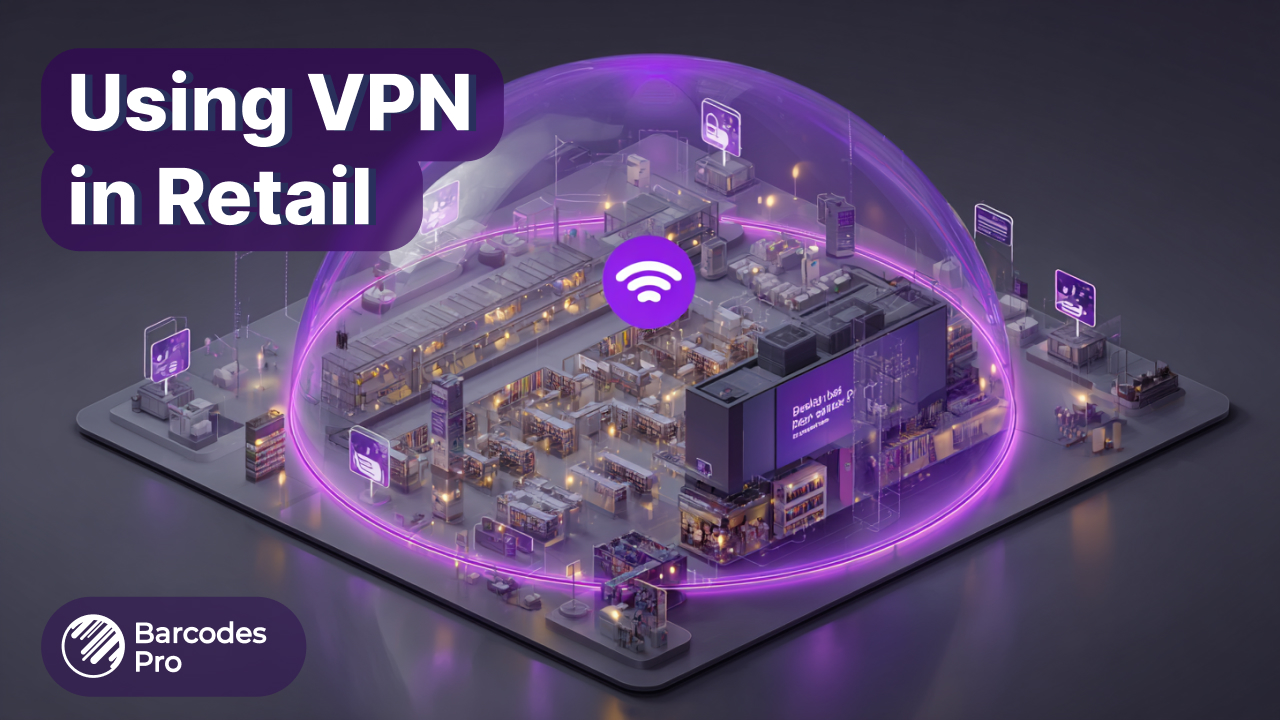
Retail has changed. A small shop can now sell to the whole world. A warehouse can be managed from a laptop. A manager can check stock from home. This is convenient. It is also risky.
Today, stores do not only sell products. They also handle data: payment details, customer names, supplier contracts, daily sales numbers, and stock levels. If this data is stolen or changed, the damage can be serious. According to several industry reports, retail is one of the top five industries targeted by cyber attacks, and the average cost of a data breach can reach millions of dollars when you count fines, downtime, and lost trust.
This is why VPN in retail management is no longer a “nice to have”. It is a basic layer of protection. The same is true for VPN for inventory systems and for building secure retail networks across many locations.
A VPN, or Virtual Private Network, creates a protected tunnel for data. It hides traffic from outsiders. It helps protect sales data, secure inventory databases, and encrypt business communications. It also helps prevent data breaches and makes it safer to manage remote retail operations.
How a VPN Helps in Simple Terms
A VPN does three main things:
It encrypts data, turning it into code while it travels. Even if someone catches it, they cannot read it.
It hides connection details so attackers cannot easily see who is talking to which system.
It creates a private path through public networks, which is useful when stores, warehouses, and offices are in different places.
With a VPN, you can support secure cloud access, connect branches safely, and let employees work remotely without opening your systems to the whole internet.
Best Practice 1: Encrypt Everything That Moves
This sounds simple, but many companies still fail here.
- Every connection between stores and central systems should be encrypted.
- Every login to inventory software should be encrypted.
- Every sync between POS and server should be encrypted.
A VPN makes this easier because it encrypts the whole connection, not just one app. A good rule is: if data moves, it should move inside a VPN tunnel.
Best Practice 2: Secure Access Between All Locations
Many retail businesses have more than one location. Sometimes dozens, sometimes hundreds. If these locations connect over the open internet without protection, the risk grows with each new store.
A site-to-site VPN can connect all locations into one secure retail network. With global VPN coverage, data transfer between branches in different countries will be seamless and risk-free. To your systems, it looks like a single private network. A good VPN, like VeePN, makes attacking such a network seem futile for hackers.
Best Practice 3: Control Who Can Access What
A VPN is not just a tunnel. It is also a gate. Not everyone needs access to everything.
- The warehouse team does not need accounting data.
- The store staff does not need supplier contracts.
- The regional manager does not need system settings.
Use the VPN together with access rules. Create roles. Limit permissions.
Best Practice 4: Protect Point-of-Sale Systems First
Point-of-sale systems are a favorite target. They handle payment data. They are often online all the time. And in many stores, they are not updated as often as they should be.
Statistics show that a large part of retail breaches start with POS systems.
Using a VPN for all POS connections reduces this risk. The POS terminal should not talk directly to the internet if possible. It should talk to the company network through a VPN.
This way, even if someone scans the internet for open systems, your POS is not visible in the same way.
Best Practice 5: Make Remote Work Safer
Remote work is not going away. Managers travel. Accountants work from home. IT staff support systems from different cities. Without a VPN, these connections are weak points.
With a VPN, you can manage remote retail operations without opening your systems to the whole world. The employee first connects to the VPN (this can be a VPN extension or application). Only then can they reach internal tools.
This also helps support secure cloud access, because the cloud systems can be placed behind the same protection layer.
Best Practice 6: Protect the Supply Chain Connections
Modern retail is connected to suppliers, logistics companies, and service providers.
Orders are sent automatically. Stock levels are shared. Status updates move all the time.
If these links are attacked, the result is not only data loss. It can stop deliveries. It can create fake orders. It can empty warehouses on paper while shelves stay full in reality.
Best Practice 7: Monitor and Update, Not Just Install
A VPN is not magic. It is a tool.
- It must be monitored.
- It must be updated.
- It must be checked.
According to security statistics, a large part of successful attacks use known, old vulnerabilities. Updates matter.
Set a schedule. Check logs. Review access lists. Remove accounts that are no longer needed.
Best Practice 8: Train People, Not Only Systems
Many breaches do not start with technology. They start with a click.
- A fake email.
- A wrong link.
- A stolen password.
Teach staff what the VPN is for. Teach them to use it always, not “most of the time”. Teach them to report strange behavior.
A simple rule works well: if you are not in the office, you are on the VPN.
How All This Helps the Business, Not Only IT
Some managers still see security as a cost. In reality, it is also protection for daily work.
Proper VPN use helps retailers:
- prevent data breaches
- protect sales data
- safeguard customer information
- secure inventory databases
- maintain data accuracy
- protect point-of-sale systems
- ensure supply chain security
- support secure cloud access
- manage remote retail operations more safely
It also builds trust. Customers notice when companies take data seriously. Partners notice it too.
A Short Reality Check with Numbers
Studies often show that over 40% of cyber attacks target small and medium businesses, around 30% of breaches involve stolen or weak credentials, and the average downtime after a serious incident can be days, sometimes weeks.
Compared to this, setting up and maintaining a VPN is cheap.
Final Thoughts: Simple Tools, Big Effect
Retail and inventory management are no longer local. They are digital. They are connected. They are fast. This also means they are exposed.
Using VPN for inventory systems and VPN in retail management is not about being perfect. It is about being prepared. It is about closing the most obvious doors to attackers.
Start with encryption. Protect your POS. Connect locations safely. Control access. Support remote work in a secure way. Build secure retail networks step by step.